Induction cooker coil material aluminum and copper which is good?
Upgrading your appliances can rejuvenate not only your home’s aesthetics but also its functionality. At QG Appliances 4 Less Springdale, we provide an extensive selection of open box, scratch, and dented appliances that offer both quality and value. Serving not just Springdale but also nearby cities like Fayetteville, Rogers, Bentonville, and Lowell.
Have you ever encountered uneven heating of the induction cooker, easy to paste the bottom of the cooking or unstable firepower? These troubles are often closely related to the coil material. As the core component of the induction cooker, the coil converts electrical energy into heat energy through the principle of electromagnetic induction, and its material directly affects the heating efficiency, uniformity and equipment life.

(1)、The core role of the coil
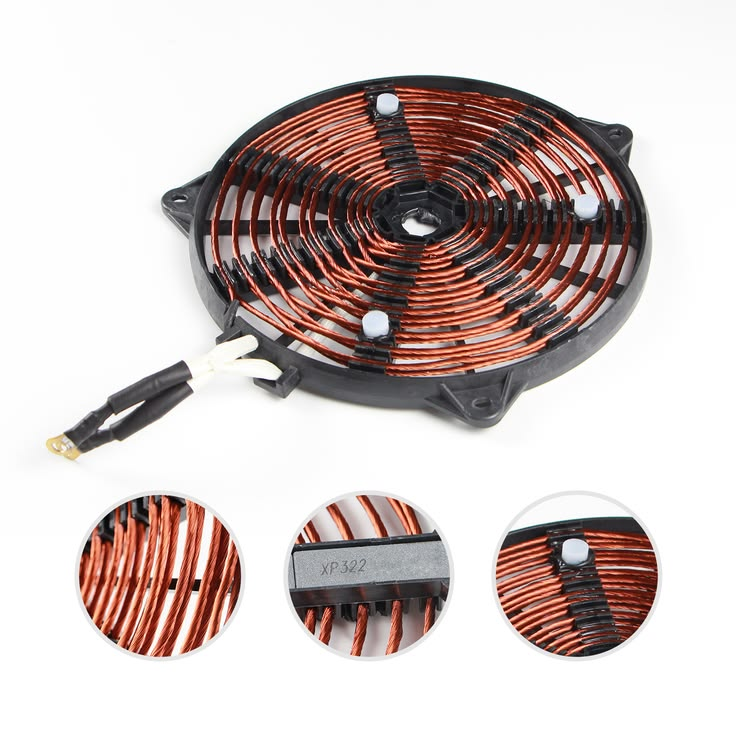
When the induction cooker works, the coil enters the alternating current to generate a high-frequency magnetic field, and the eddy current is induced at the bottom of the iron pot to achieve heating. This 1 process relies on the electrical conductivity, high temperature resistance and structural stability of the coil. High-quality coils need to meet three core requirements: low resistance to reduce energy loss, high melting point to withstand high temperatures, uniform magnetic field distribution to ensure uniform heating.
(2)、Aluminum vs copper
1. Pure copper coil:
The conductivity of copper (58 MS/m) is much higher than that of aluminum (35 MS/m), the resistance is lower, and the heat generation is reduced by about 40%. This enables it to carry more current, supports continuous heating of high power above 2200W, and has stable firepower and is not easy to jump gears. The melting point of copper (1083 ℃) is 1.6 times that of aluminum (660 ℃), excellent high temperature resistance, long-term use is not easy to aging deformation. However, the cost of copper is 4 times that of aluminum, and the weight is larger, which requires higher structural design of induction cooker.
2. Aluminum-clad copper coil:
The aluminum-clad copper coil takes into account both cost and performance by plating copper on the outer layer of the aluminum wire. The conductivity is better than pure aluminum, close to 80% of copper, but the high temperature resistance is weaker than pure copper, and the resistance increases due to long-term high temperature oxidation. Some manufacturers use a double-layer winding process to improve thermal stability by increasing the thickness of the coil, but the cost is still lower than pure copper.
3. Pure aluminum coil:
The conductivity of aluminum coil is the worst, and it is necessary to increase the wire diameter or increase the number of turns to make up for the resistance loss, resulting in the increase of coil volume and weight. The expansion coefficient of aluminum is high, and repeated hot and cold cycles can easily lead to deformation of the coil and failure caused by poor contact. More seriously, the aluminum and copper terminals are prone to electrochemical corrosion at the junction, causing an increase in contact resistance and even burning the motherboard.
(3)、coil diameter:
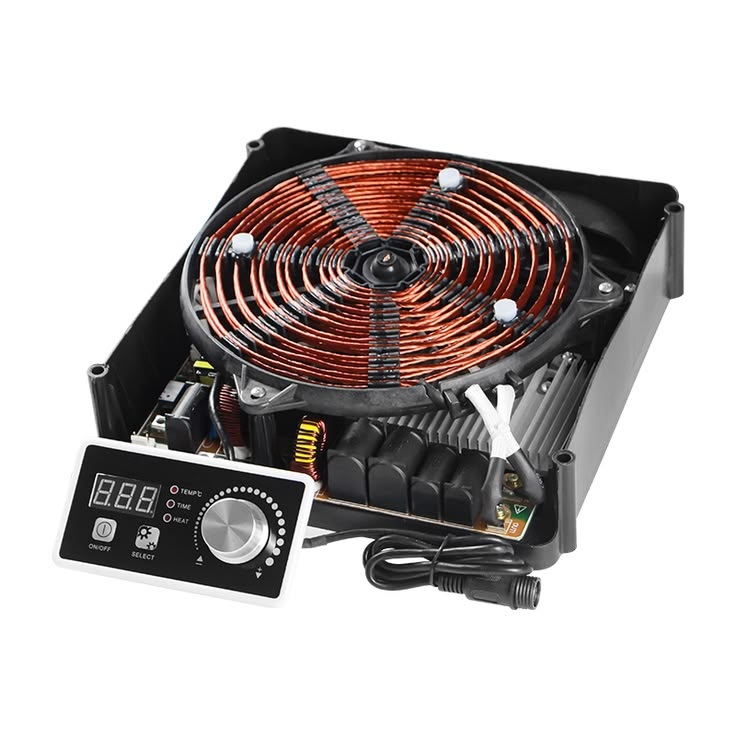
The coil diameter directly affects the magnetic field coverage and heat distribution. The coil diameter of the mainstream induction cooker is 15-20cm, and the large coil with a diameter ≥ 18cm can expand the heating area, make the bottom of the pot more evenly heated, and reduce the phenomenon of overheating and cooling the edge of the center. The actual measurement shows that the contact area between the 18cm coil and the bottom of the pot is 44% higher than that of 15cm, and the probability of pasting pot is 60% lower. At the same time, the large-diameter coil with double-layer winding can form a three-dimensional magnetic field and improve the thermal efficiency by about 15%. However, if the diameter is too large (such as 25cm), the magnetic induction line will be dispersed and the thermal efficiency will decrease. Therefore, it is necessary to balance the diameter and the energy efficiency ratio.
(4)、science shopping guide:
1. Give priority to pure copper coil: when the budget is sufficient, it is recommended to buy pure copper coil induction cooker with diameter ≥ 18cm, taking into account heating efficiency, uniformity and durability.
2. Beware of the "pseudo-copper" propaganda of aluminum-clad copper: use the key to lightly scratch the surface of the coil, pure copper will leave copper-colored scratches, while aluminum-clad copper will show silver and white.
3. Pay attention to the number of coil layers and wire diameter: double-layer coil heating efficiency is 20% higher than single-layer coil, and single wire diameter ≥ 2.5mm ² can reduce current loss.
4. Verify safety certification: Select products that have passed 3C, CE and other authoritative certifications to ensure radiation control and material safety.
Conclusion
The choice of induction cooker coil material is a balance between science and practicality. Pure copper coils are ideal for excellent performance, but they need to accept their high cost; aluminum-clad copper dominates the market with cost performance. Combined with the large diameter design of ≥ 18cm, the perfect experience of uniform heating, high efficiency and long life can be achieved. When purchasing, be sure to check the coil material, diameter parameters and safety certification, so that every cooking has become a double guarantee of safety and delicacy.