The evolutionary history behind the washing machine
Washing machine, an indispensable home appliance for every household, its evolutionary history itself is a condensed brief history of science and technology. In a short period of one hundred years, laundry tools have moved from wooden hand to intelligent perception, and every innovation is redefining the meaning of cleanliness.
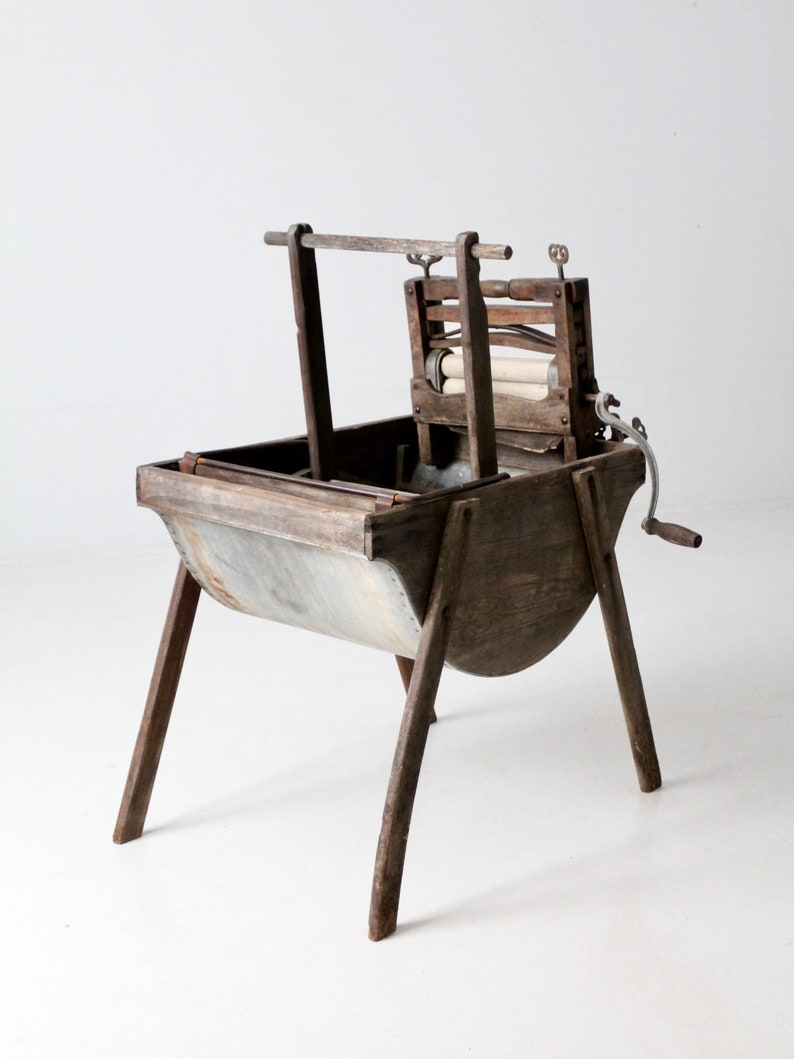
(1)、Hand wooden washing machine (the middle of the 19th century)
Hand-cranked wooden washing machines were born in the 1850 s and 1880 s. These machines usually consist of a huge wooden drum and a device with paddles or stirring rods inside.
1. working principle
Its principle is actually very simple-imitating human hand washing. The difference is that it no longer needs human hands to rub, but by rotating the outer handle, driving the paddle in the barrel to roll, using the power of water to stir the clothes, so as to achieve the purpose of cleaning.
2. advantages
①. Initial hands release
Compared with beating with a washboard by the river, it greatly reduces the physical labor intensity, and the user only needs to shake the handle.
②. Simple structure
Pure wood structure, almost no technical threshold, broken also easy to repair.
3. reasons for being eliminated
①. Still laborious
It is still inseparable from the human drive. Washing 1 buckets of clothes often requires continuous shaking for more than ten minutes or even half an hour, which is still a huge test of physical strength.
②. Inefficient
The water flow generated by manual shaking is limited, the cleaning effect is unstable, and there is no dehydration function. After washing, it needs to be wrung out manually.
③. Material defect
Wooden structure long-term soaking water is easy to decay, mildew, breeding bacteria, health condition is worrying.

(2)、Electric single drum stirring washing machine (early 20th century to 30 years)
Around 1908, the first electric washing machine "Thor" came out, marking the beginning of the electric washing machine era. The washing machine has a stirring rod erected in the center of the barrel with a spiral blade.
1. working principle
Its core lies in the electric motor. After the power is turned on, the motor drives the stirring rod to rotate and swing repeatedly, forcing the water to penetrate the clothing fibers and "beat" the dirt out like a small turbine.
2. advantages
①. Completely liberate manpower
This is a revolutionary breakthrough. People only need to connect the electricity and set the time, and the machine can work by itself without manual shaking.
②. Strong cleaning power
The power of the motor far exceeds the manpower, and the mechanical force generated can more effectively remove stubborn stains on the collar and cuffs.
3. reasons for being eliminated
①. Severe wear
This violent stirring method is very unfriendly to clothes, just like repeatedly beating clothes with a stick, causing clothes to be easily entangled, deformed and worn, and delicate fabrics such as silk are basically afraid to be put in.
②. Inconvenient to use
Such machines usually only have a laundry function, without a dehydrating bucket. After washing clothes, people need to clamp the wet clothes with two rubber rollers and manually turn the handle to squeeze out the water (that is, the early wringer), which is very troublesome and dangerous.
③. Huge noise
The roar of the metal gear box and motor, coupled with the sound of the stirring rod hitting the clothes, makes the washing process very noisy.

(3)、Fully automatic pulsator/drum washing machine (since 1980 s)
Since the 1980 s, fully automatic pulsator and drum washing machines have gradually become the mainstream of the market.
1. working principle
①. Wave-type
The pulsator disc at the bottom of the barrel rotates forward and reverse at high speed, generating a strong vortex, driving the clothes to roll up and down.
②. Drum type
There are lifting ribs on the wall of the barrel. When the drum rotates slowly, the clothes are brought to a high place, and then the clothes are beaten down by gravity to simulate the washing effect of beating.
Most importantly, they all automate the whole process of washing, rinsing, and dehydration through a program controller (early mechanical or current computer board).
2. advantages
①. Extremely convenient
After setting the program, the machine can automatically complete the whole process of water intake, washing, rinsing, drainage and drying, and truly realize one-key laundry.
②. Stable washing effect
This generation of washing machines have more accurate control of water temperature, water level and washing time, and the washing ratio is greatly improved.
③. Functional integration
Started to appear for different fabrics washing procedures, such as fast wash, wool wash, heat wash, etc.
3. limitations
Although the traditional automatic washing machine is easy to use, but under the examination of the intelligent era, the defects are beginning to appear:
①. Health dead angle problem
Whether it is a pulsator washing machine or a drum washing machine, the internal and external barrels are interlinked. When washing, scale, fluff, and laundry detergent residues
will adhere to the interlayer, which will become a breeding ground for bacteria over time, causing clothes to "wash more and more dirty" and even cause skin allergies.
②. Cause entanglement and wear of clothes
When washing clothes with pulsator washing machine, the clothes are easy to be wound and knotted, resulting in pulling and deformation. Although the drum washing machine wears little, the washing time is too long, and the cleaning effect on large clothes is sometimes not ideal.
③. Not intelligent enough
They can only passively execute instructions, cannot sense the degree of soiling of the clothes, and cannot automatically put the corresponding detergent dosage according to the weight of the clothes.
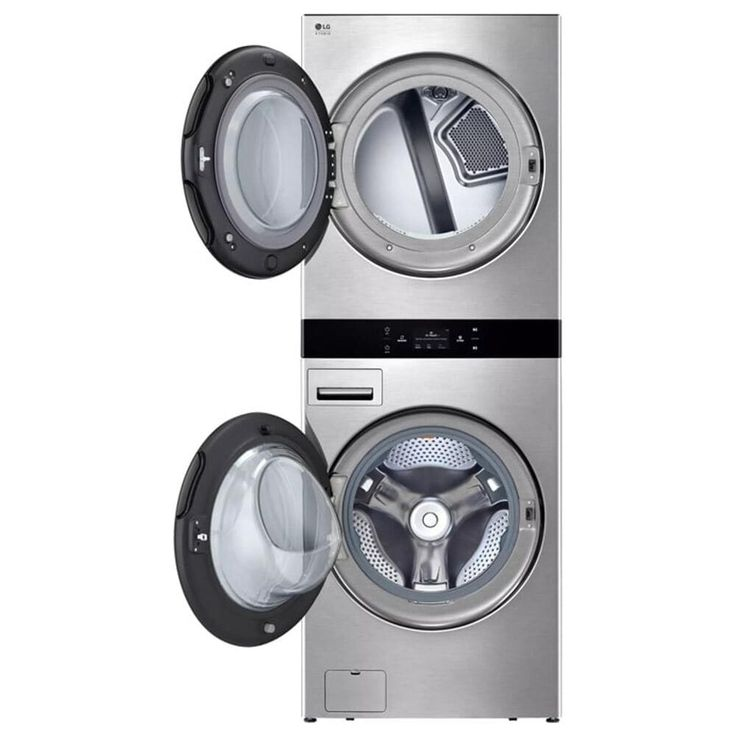
(4)、Intelligent washing machine (since the beginning of the 21st century)
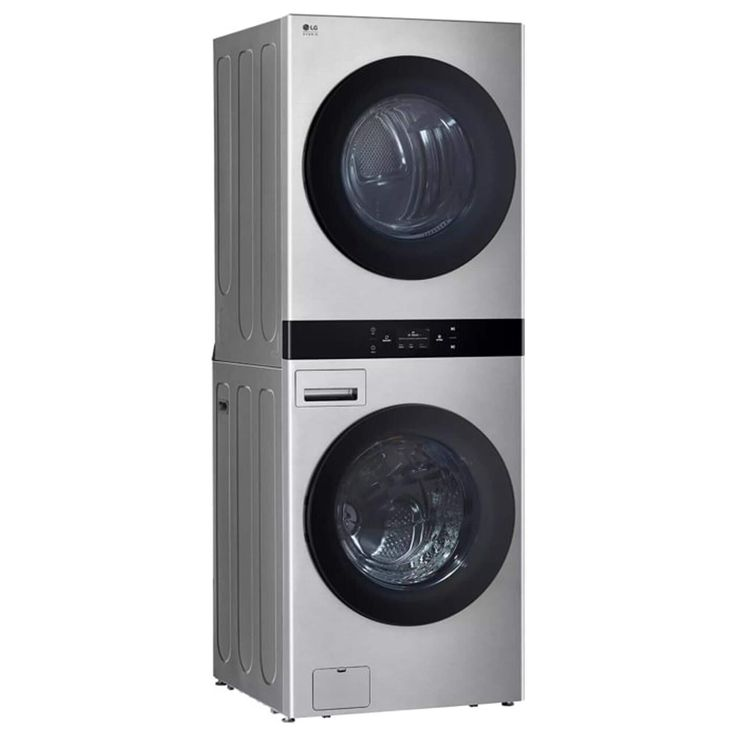
With the development of the Internet of Things and sensor technology, smart washing machines are gradually emerging.
1. working principle
On the basis of the traditional mechanical structure, a large number of high-precision sensors and artificial intelligence algorithms are added:
①. The degree of soiling of the laundry is judged by detecting the turbidity of the water by the optical sensor.
②. The weight of the clothes is sensed by the load cell.
③. Intelligent delivery of detergent through water quality hardness sensor.
All this data is collected into the AI chip, which automatically calculates the optimal washing scheme.
2. breakthrough Point
①. Self-cleaning function
In view of the sanitary dead corners of traditional machines, the new washing machine has added self-cleaning cylinders, antibacterial materials and even micro-sewage outlets to solve the problem of secondary pollution.
②. Intelligent delivery
The machine can automatically calculate and put laundry detergent and softener according to the amount of clothing, not only to avoid residue, but also to reduce waste.
③. Extreme health and sterilization
Pay more attention to sterilization, mite removal, air washing (deodorizing and dusting clothes), and even nursing for special allergens.
Conclusion
Technology has changed housework from a burden to enjoyment. When the washing machine learns to think, we have more time to embrace life. In the future, with the deep integration of AI and the Internet of Things, washing machines will better understand the needs of clothes and make our lives cleaner and more calm.